


The BRE 365 Soakaway Test, named after its defining guidelines published in 1991 by the Building Research Establishment (BRE), is a method of evaluating the natural soil’s permeability. This test, which is particularly popular in the UK, is a crucial step in the design of soakaways — drainage systems that allow water to percolate into the ground, reducing the risk of surface water flooding and promoting natural groundwater recharge.
The test procedure, as defined in the BRE Digest 365 ‘Soakaway Design’ BRE, 2016, requires at least three fill and drain cycles. This approach helps obtain the most accurate and representative infiltration rates, shedding light on the performance of natural deposits under wetter conditions. The test is typically conducted within the underlying subsoils or natural deposits, excluding Topsoil or Made Ground.
Understanding the principles and processes of the BRE 365 Soakaway Test is crucial for planning and executing effective drainage solutions. As we delve deeper into this topic, we will explore the importance of this test, its detailed procedure, factors influencing the test results, and its role in planning and development. We will also highlight how IBEX Consulting Engineers leverages its expertise to conduct the BRE 365 Soakaway Test, providing robust and cost-effective solutions for various construction projects.
Understanding the Importance of BRE 365 Soakaway Test
The BRE 365 Soakaway Test is more than just an engineering procedure; it’s a pivotal tool in assessing the viability of specific forms of drainage systems and shaping the future of sustainable urban planning. Recognizing its importance is the first step towards leveraging its full potential.
Role in Sustainable Urban Drainage Systems (SuDS)
Imagine constructing a new development, only to realize post-construction that the ground is not suitable for managing surface water run-off. This is where the BRE 365 Soakaway Test plays a crucial role. The test evaluates whether the site’s ground conditions are apt for infiltration forms of Sustainable Urban Drainage Systems (SuDS), such as soakaways.
SuDS aim to mitigate drainage problems by dealing with and treating surface water runoff at the source, or by slowing down its release back into the surface water network. Soakaways, a natural underground drainage system, are high up in the SuDS hierarchy. They store surface water runoff before allowing it to discharge into the ground. This ensures that no surface water runoff ends up in the local surface water network, watercourses, or rivers, thus preventing potential flooding.
The BRE 365 Soakaway Test measures the soil’s water absorption rate, helping to determine if soakaways can be effectively implemented at the site. This proactive approach ensures that the surface water arising from development proposals can be managed and treated at the source, reducing strain on surface water networks and rivers.
Importance in Surface Water Management
Managing surface water runoff is a critical challenge in urban planning. Excessive surface water can overload drainage networks, potentially causing flooding and damaging infrastructure. The BRE 365 Soakaway Test provides essential data for effective surface water management, making it a vital tool for construction project managers.
The test measures the infiltration rate of the soil, which then informs the size of the proposed soakaway or other infiltration device. This size is based on a 1 in 100-year storm event plus a 40% climate change allowance. In simpler terms, the BRE 365 Soakaway Test reveals how quickly water drains from the soil. Once this rate is established, the correct infiltration device size can be calculated, which then informs the final design of the surface water management system.
Understanding the importance of the BRE 365 Soakaway Test is a stepping stone to ensuring that your project is not only compliant with drainage regulations but also contributes positively to sustainable urban development. By integrating this test into your project planning, you can ensure effective surface water management, ultimately protecting your construction project from potential water-related damages.
Detailed Procedure of BRE 365 Soakaway Test
In the realm of geotechnical engineering, precision and accuracy are the lifelines of every operation. This is particularly true when it comes to the BRE 365 Soakaway Test. This test is a meticulous process that requires careful execution to ensure reliable results. Let’s delve into the step-by-step procedure that makes this test an effective tool for assessing ground conditions and planning effective water drainage systems.
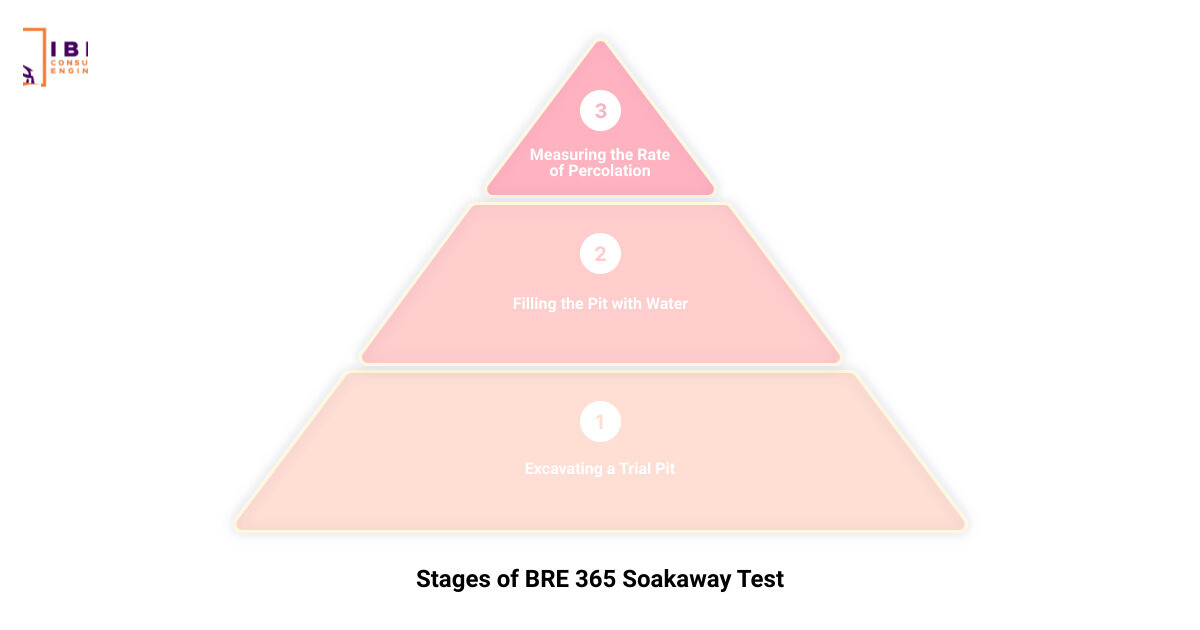
Excavating a Trial Pit
The first step in the process involves the excavation of a trial pit. This pit acts as a small-scale model of the intended soakaway. The objective is to mimic the conditions that the soakaway will encounter once it is installed. The excavation can be done manually, but it is often more efficient and accurate to use mini-diggers like a CAT or JCB. The size and depth of the pit can vary depending on the specific requirements of the site and the project.
Filling the Pit with Water
Once the trial pit is ready, the next step is to fill it with water. But this is not a simple one-time task. The pit must be filled repeatedly and in quick succession. This step simulates the conditions that a soakaway would face during periods of heavy rainfall. The rapid filling of the pit is critical in mimicking the high levels of run-off that can occur during such weather conditions.
Measuring the Rate of Percolation
In the final step, the rate of percolation is measured. This is essentially the speed at which water seeps down through the soil. This test is crucial in determining the soil’s water absorption rate. The measurement is taken during the filling process. The results of the percolation tests provide valuable insights that can be used to calculate the optimal size of the soakaway. In line with the BRE Digest 365 guidance, the soakaway should be able to discharge from full to half-volume within 24 hours.
In conclusion, the BRE 365 Soakaway Test is a systematic and detailed procedure that provides valuable data on the suitability of a site for soakaway installation. The accurate execution of this test can significantly contribute to the success of your project, ensuring that your drainage systems are not only compliant with regulations but also effective and sustainable.
Factors Influencing the BRE 365 Soakaway Test
When it comes to conducting a BRE 365 Soakaway Test, it’s important to remember that it isn’t a one-size-fits-all process. Certain factors can significantly impact the outcome of the test, affecting everything from the rate of percolation to the size of the soakaway required. Let’s delve into a couple of these influential factors.
Regional Factors and Climate Change
Geographical location can significantly influence the results of a BRE 365 Soakaway Test. The climate and weather conditions in your area play a major role in determining the infiltration rates of the soil. If your project is located in an area that frequently experiences heavy rainfall or is prone to flooding, the soil’s water absorption rate may be lower than that in drier regions.
Furthermore, the impact of climate change is a crucial factor to consider. As we face more extreme weather conditions and increased rainfall, it’s vital to factor in these changes when conducting a BRE 365 Soakaway Test. Therefore, when calculating the size of the proposed soakaway or other infiltration device, it’s necessary to consider a 1 in 100-year storm event plus a 40% climate change allowance.
Test Hole Size and Soil Type
The size of the test hole and the type of soil being examined also significantly influence the results of a BRE 365 Soakaway Test. The test hole, or trial pit, acts as a replica of the intended soakaway. While these pits can be dug by hand, they are often excavated by mini-diggers for accuracy and efficiency.
The type of soil being tested can greatly influence the water absorption rate. For instance, sandy soil tends to have a higher percolation rate than clay soil. Therefore, understanding the specific soil type at the proposed soakaway site is crucial for accurately determining the size of the soakaway required.
In conclusion, the BRE 365 Soakaway Test is a complex process influenced by various factors. From regional climate conditions to the soil type at the site, it’s crucial to understand these factors to ensure the test’s accuracy and the subsequent success of the soakaway installation.
Interpreting the Results of BRE 365 Soakaway Test
Unraveling the significance of the BRE 365 Soakaway Test lies in the interpretation of its results. The data provides valuable information not only on designing the soakaway but also on the suitability of the site for infiltration.
Determining the Size of the Soakaway
One of the primary purposes of the BRE 365 Soakaway Test is to ascertain the size of the soakaway needed for the site. The soil infiltration rate, determined by the percolation test, is a key factor in this calculation. This rate expresses how quickly water drains from the soil, which in turn helps to decide the optimal size of the soakaway.
The size of the soakaway must be adequate to handle a 1 in 100-year storm event plus a 40% allowance for climate change. It needs to be able to release the volume of water it stores relatively quickly into the ground to maintain the necessary capacity to receive high levels of run-off in the event of a storm and heavy rainfall. An effective soakaway design, based on accurate test results, ensures that the soakaway can deal with surface water runoff efficiently, mitigating the risk of flooding.
Assessing the Suitability of the Site for Infiltration
Beyond determining the size of the soakaway, the BRE 365 test results also shed light on the suitability of the site for infiltration. For a soakaway to function well, the site needs to have good infiltration capabilities.
The percolation rate measured during the test offers insight into the ground conditions. If the water absorption rate of the soil is high, it means that the ground conditions are favourable for infiltration. Conversely, if the percolation rate is low, it might indicate that the ground is not suitable for a soakaway and alternative drainage solutions may need to be explored.
In essence, the BRE 365 Soakaway Test results serve as a vital tool in assessing the potential success of a soakaway installation. They provide actionable data for creating a sustainable and effective drainage solution, aiding in both the design and planning stages of development projects.
Role of BRE 365 Soakaway Test in Planning and Development
In the complex world of construction planning and development, the BRE 365 Soakaway Test plays a pivotal role. It’s more than just a protocol for assessing soil permeability. It is a critical component of the planning application process and can significantly influence the site layout and design.
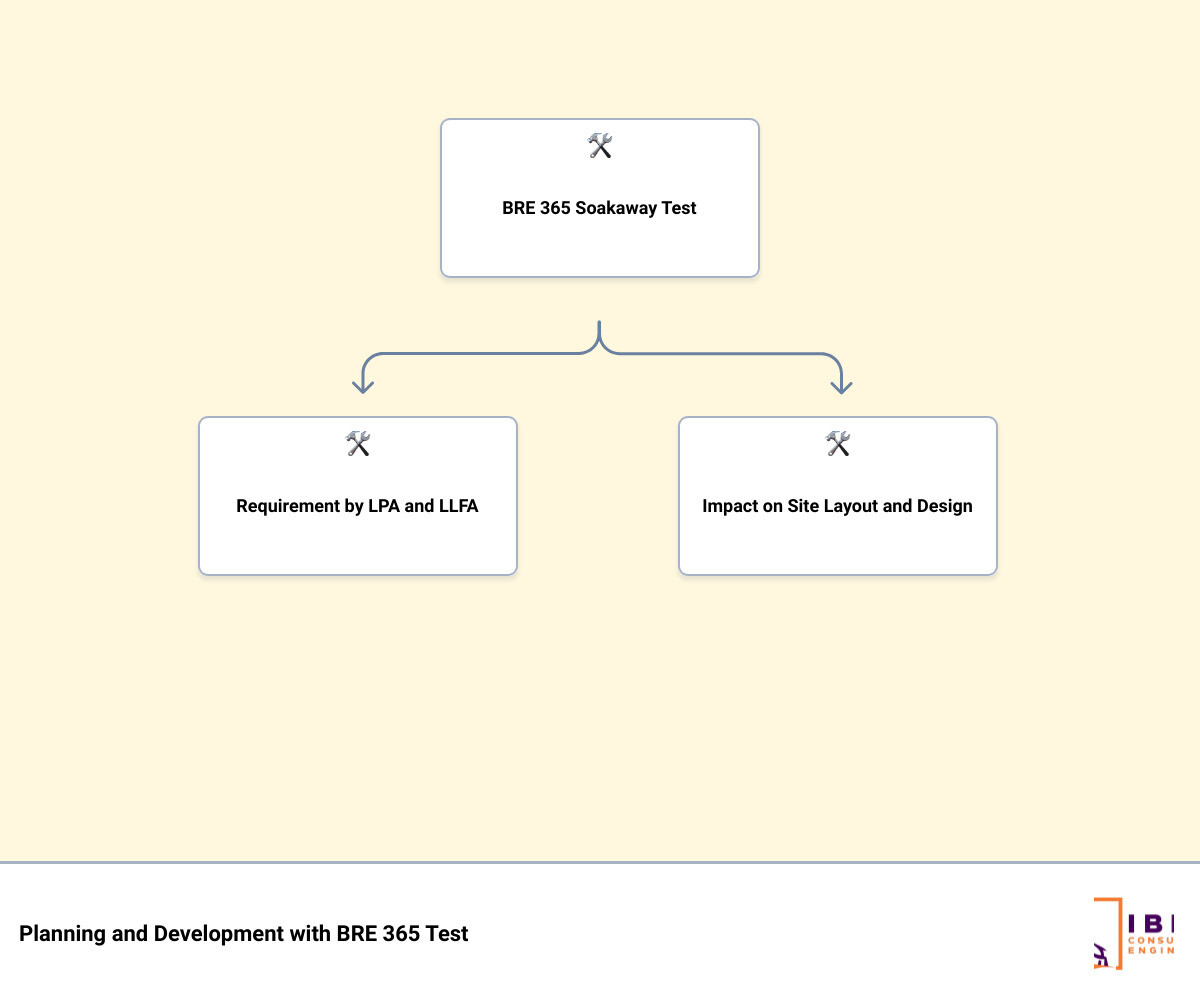
Requirement by Local Planning Authorities (LPA) and Lead Local Flooding Authorities (LLFA)
When it comes to planning applications, Local Planning Authorities (LPA) and Lead Local Flooding Authorities (LLFA) often require SuDS reports. These reports ensure that development proposals have taken into account the surface water runoff from the site and have feasible strategies in place even before the development commences.
The BRE 365 Percolation test is typically requested for major developments where a desktop geological study indicates potential for infiltration in the underlying geology. This requirement is part of the process of demonstrating adherence to the SuDS hierarchy and helps in examining other methods of restricted surface water disposal if the test fails.
This test is therefore not just a technical requirement but a crucial step in illustrating to the authorities that the necessary steps have been taken to manage surface water runoff effectively.
Impact on Site Layout and Design
The results of a BRE 365 Soakaway test can significantly impact the site layout and design. For instance, if the percolation test passes but there is no available space for a soakaway, the planning authority may request the client to modify the site layout to accommodate infiltration.
This is particularly relevant for developers aiming to maximize the use of available space. The need to maintain a minimum distance of 5 metres between any infiltration device and a habitable building often necessitates adjustments in the site layout.
Moreover, sites with high clay content soil or a high water table may not be suitable for a soakaway. This underlines the importance of the BRE 365 Soakaway test in informing site design decisions, avoiding costly mistakes, and ensuring the success of sustainable drainage systems in the long run.
In conclusion, the BRE 365 Soakaway Test is not just a functional step in the construction process but a game-changer in planning and development, shaping the design and layout of a construction project. By providing critical data on soil permeability, it guides developers and planners towards optimal, sustainable, and legally compliant decisions.
How IBEX Consulting Engineers Conducts BRE 365 Soakaway Test
Navigating the intricacies of BRE 365 Soakaway Test doesn’t have to feel like navigating a labyrinth. At IBEX Consulting Engineers, we simplify this crucial process with professional expertise, cutting-edge techniques, and a meticulous approach to ensure optimal, sustainable, and legally compliant decisions for your construction projects.
On-site Percolation Tests
At the heart of the BRE 365 Soakaway Test process lies the on-site percolation tests. We begin by excavating a trial pit that mimics the intended soakaway. Our team then fills this pit with water repeatedly, in a short space of time, simultaneously measuring the rate of percolation. This valuable data forms the foundation of our soakaway design, providing us with critical information about the soil’s water absorption rate.
Our methods adhere strictly to the BRE Digest 365 ‘Soakaway Design’ BRE, 2016 guidelines, which mandate at least three fill and drain cycles for accurate and representative infiltration rates. We conduct these tests within the underlying subsoils or natural deposits, not Topsoil or Made Ground, ensuring the most precise results.
Providing Robust and Cost-effective Solutions
The devil is in the details when it comes to BRE 365 Soakaway Test. At IBEX Consulting Engineers, we not only focus on conducting these tests meticulously but also on interpreting the results accurately. This allows us to determine the optimal size of the soakaway required, one that can effectively manage a 1 in 100-year storm event plus a 40% climate change allowance.
We understand that each site presents unique challenges and opportunities. That’s why we tailor our approach to suit your specific project. Whether you are dealing with impermeable underlying strata or exploring the option of deeper soakaways such as borehole soakaways, we provide robust and cost-effective solutions. Our goal is to ensure that your construction project aligns with sustainable drainage design principles, maximizes attenuation capacity, and meets all legal requirements.
In conclusion, IBEX Consulting Engineers takes the guesswork out of BRE 365 Soakaway Testing. We combine our expert knowledge, meticulous methods, and client-focused approach to provide solutions that meet your project’s unique needs while promoting sustainable and responsible construction practices.
The value of BRE 365 Soakaway Test in infrastructure projects is immense. It provides a scientifically backed, dependable method to assess the suitability of a site for soakaway installation. By gauging the soil’s water absorption rate, this test plays a pivotal role in ensuring effective surface water management. In doing so, it significantly reduces the risk of flooding and contributes to the creation of a sustainable urban environment.
Moreover, the BRE 365 Soakaway Test is not just an assessment tool, but a guiding principle in the design and planning phase of a project. It helps in calculating the size of the soakaway required, which in turn, influences the layout and design of the site. By complying with the standards set by the Building Research Establishment (BRE), developers can ensure that their projects meet the stringent requirements of Local Planning Authorities (LPA) and Lead Local Flooding Authorities (LLFA).
However, the true value of the BRE 365 Soakaway Test lies in its implementation. It requires a team of seasoned professionals to conduct the test accurately and interpret the results correctly. This is where IBEX Consulting Engineers come into play.
At IBEX, we strive to deliver robust and cost-effective solutions. Our team of experienced engineers carry out on-site percolation tests, adhering to the BRE 365 Soakaway Test procedure meticulously. We understand that each site is unique, and hence, we tailor our approach to meet the specific needs of your project.
We believe in sustainable development and are committed to providing solutions that not only meet the immediate needs of your project but also contribute to environmental sustainability. By choosing IBEX for your BRE 365 Soakaway Test, you are choosing a path of responsible and sustainable construction.
In essence, the BRE 365 Soakaway Test is an invaluable tool in infrastructure projects, ensuring sustainable water management, reducing flood risks, and guiding planning and development. And by entrusting this crucial task to IBEX Consulting Engineers, you ensure that your project is built on a foundation of scientific accuracy, professional expertise, and environmental responsibility.