

Understanding the importance of CBR testing in road construction and pavement design
When it comes to building and maintaining roads that endure over time, one crucial test stands out: CBR testing. This test assesses the strength and suitability of soil subgrade—the foundation of pavement structures. Essentially, CBR testing helps determine how thick and what type of pavement should be constructed, ensuring the roads remain safe and durable under traffic loads and environmental conditions.
Why is CBR testing crucial?
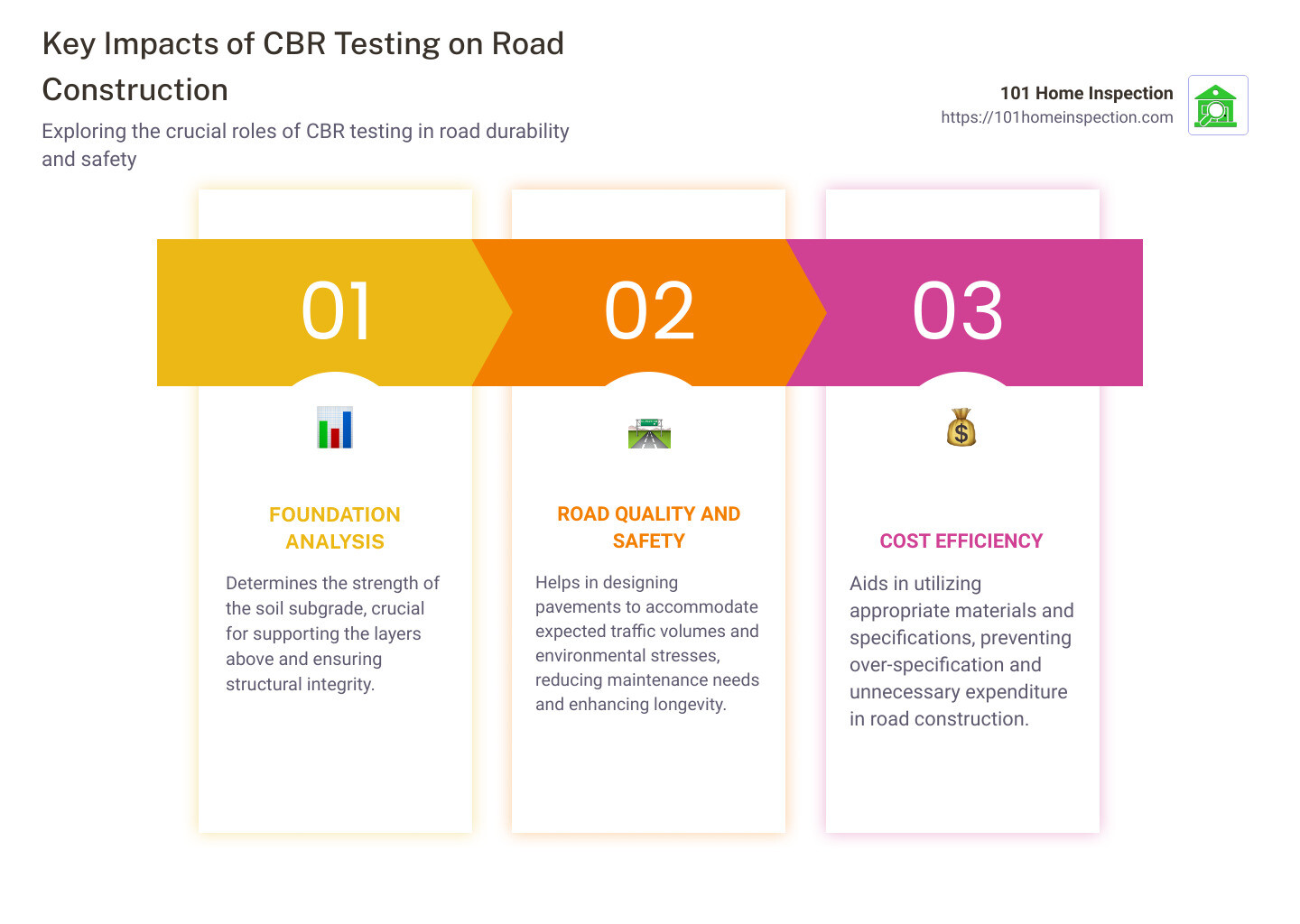
- Foundation Analysis: It assesses the strength of the ground beneath the roads.
- Road Quality and Safety: Helps in designing pavements that can handle expected traffic and stress.
- Cost Efficiency: Aids in preventing over-specification and unnecessary costs in road construction.
CBR, or California Bearing Ratio, is a penetration test for evaluating the mechanical strength of natural ground, subgrades, and base courses beneath new road constructions. It is an indispensable part of road construction that ensures the right type of road materials are used and applied to the right thickness, providing a stable and durable road surface.
CBR testing not only influences the materials chosen for road layers but also impacts long-term maintenance and usability. By understanding the strength and properties of the soil, engineers can prevent future road failures and unnecessary repairs, which translates to safer and more cost-effective roadways.
What is CBR Testing?
CBR testing, or California Bearing Ratio testing, is a crucial process in civil engineering, specifically in the design and construction of roadways. This test measures the strength of subgrade soil and base materials by comparing them to a well-graded crushed stone, a standard established by the California Division of Highways in the 1930s. The test essentially determines the bearing capacity of the ground and helps in designing pavement thickness that can withstand anticipated traffic loads without excessive deformation or failure.
Historical Background
The origins of CBR testing trace back to its development by the California Division of Highways. Initially intended to evaluate and ensure the quality of highway materials, this method has since become a global standard, influencing how road subgrades are assessed worldwide. The test was standardized and detailed further in British Standard BS 1377-9, making it a universally recognized method in civil engineering practices for assessing the mechanical strength of natural ground, subbases, and subgrades.
Standardization in Testing
The test procedure is well-documented in BS 1377-9, titled “Methods of Test for Soils for Civil Engineering Purposes – Part 9: In-situ tests”. This part of the standard provides a comprehensive guide on how to conduct CBR tests effectively, ensuring consistency and reliability in the results. Whether it’s for designing new roads or evaluating existing ones, the CBR test provides essential data that helps engineers make informed decisions about material selection and pavement design.
CBR testing not only influences the materials chosen for road layers but also impacts long-term maintenance and usability. By understanding the strength and properties of the soil, engineers can prevent future road failures and unnecessary repairs, which translates to safer and more cost-effective roadways. The next section will delve into how precisely CBR testing affects road construction, from pavement thickness decisions to the choice of materials.
How CBR Testing Influences Road Construction
CBR testing plays a crucial role in the construction and design of roads. Let’s explore how this testing impacts several key areas of road construction:
Pavement Thickness
The thickness of the pavement is directly influenced by the CBR value of the soil. Higher CBR values indicate a stronger soil that can support heavier loads, allowing for thinner pavement structures. Conversely, lower CBR values will require thicker layers of pavement to distribute the load and prevent failure. This relationship ensures that the pavement is designed efficiently, balancing cost and performance.
Material Selection
Choosing the right materials for the road layers is essential for durability and cost-effectiveness. CBR testing helps identify the soil’s ability to support road traffic, which in turn influences the type of materials used. For instance, soils with low CBR values might need stabilized materials or additional layers of sub-base to enhance the overall strength and longevity of the road.
Subgrade Strength
The strength of the subgrade is a fundamental factor in road design. CBR testing assesses the subgrade’s load-bearing capacity, providing essential data that helps engineers optimize the subgrade treatment. If the subgrade is weak (low CBR value), it may need to be improved through compaction, stabilization, or replacement to meet the demands of anticipated traffic loads.
Bearing Capacity
The bearing capacity of a road tells us how well the pavement can support the loads applied by traffic without excessive deformation or failure. CBR values are used to estimate the bearing capacity of the soil. This information is crucial for designing a road structure that can withstand the test of time and usage, particularly in areas subjected to heavy traffic or adverse weather conditions.
In summary, CBR testing is vital for determining the structural integrity and viability of road materials and designs. By understanding the soil’s bearing ratio, engineers can make informed decisions that lead to safer, more durable roads. We’ll look into the specific methods and equipment used in CBR testing, enhancing our understanding of this crucial process.
Key Methods and Equipment in CBR Testing
CBR testing is a cornerstone in geotechnical engineering, particularly in the design and evaluation of pavement structures. Here we delve into the methods and equipment used in both laboratory and field settings, as well as explore alternative and supplementary tests.
Laboratory CBR Testing
In the lab, CBR testing follows strict protocols to ensure accuracy and repeatability. The most common standard used is ASTM D1883, complemented by AASHTO T 193 which mirrors the ASTM standard closely. The laboratory test measures the strength of compacted soil by penetrating it with a piston at a steady rate.
Equipment necessary for these tests includes:
- A load frame with a capacity of at least 10,000lbf (44.5kN)
- A penetration piston
- Dial indicators for displacement measurement
- CBR molds
- Surcharge weights and swell plates
Sample preparation is meticulous, involving the compaction of soil samples at their optimum moisture content to achieve desired density levels. This preparation can vary, including methods like adjusting water content or modifying the compaction effort to simulate field conditions.
Field CBR Testing
Field CBR testing is crucial for assessing in-situ soil conditions, which often differ significantly from those in the lab. The standard previously guiding these tests was ASTM D4429, though it’s currently under review. Field testing uses similar penetration methods but adapts to the uncontrolled environment of the field.
Field equipment includes:
- A penetration piston, identical to the laboratory version
- A reaction load setup, often using a heavy vehicle or anchored system
- Field surcharge plates and a support bridge to isolate the dial gauge
Testing in the field considers less-than-ideal conditions like varying moisture and density, providing a more realistic assessment of soil strength under actual load conditions.
Alternative and Supplementary Tests
Beyond standard CBR tests, several alternatives provide valuable insights, especially in challenging or remote locations:
- Dynamic Cone Penetrometer (DCP) Test (ASTM D6951): This test is quicker and can be executed directly on in-situ soils without the need for sample preparation. It’s particularly useful for estimating CBR values in field conditions where traditional methods might be impractical.
- Limerock Bearing Ratio (LBR) Test (FM 5-515): Similar to CBR but specifically designed for the unique soil conditions in the Southeastern United States, often used in Florida.
These tests complement CBR by offering quicker or more specialized ways to assess soil strength and bearing capacity, crucial for certain project requirements or geographic conditions.
By employing a combination of these laboratory and field tests, engineers can obtain a comprehensive understanding of the soil properties, leading to more accurate and safe pavement designs. We’ll explore the detailed procedures involved in conducting these tests, ensuring clarity and precision in the testing process.
CBR Testing Procedures and Standards
Standard Test Procedure
CBR testing is a critical method used to determine the strength and stability of subgrade soil, base, and sub-base materials under loaded conditions, similar to those experienced by road pavements.
Test Setup
The test begins with the preparation of soil samples, which are compacted in layers within a CBR mold. These samples can either be prepared in a lab or taken directly from the field. The standard size for the mold is typically 6 inches in diameter and 7 inches in height.
Penetration Rates
A piston, with a diameter of 1.954 inches, is used to penetrate the soil sample at a constant rate of 0.05 inches per minute. This controlled rate ensures uniform application of pressure and consistent data collection.
Data Collection
As the piston penetrates the soil, the force required to achieve each depth of penetration is recorded. The main depths of interest are 0.1 and 0.2 inches, where the pressures are measured and compared to the standard pressures of 1,000 psi and 1,500 psi respectively.
Soaked vs. Unsoaked Tests
CBR tests are typically performed in two variants: soaked and unsoaked. The choice between these tests depends heavily on the environmental conditions the pavement will face.
Moisture Conditions
In the soaked test, the prepared specimens are submerged in water for four days to simulate wet weather conditions. This soaking aims to account for the worst-case scenario, assessing the soil’s strength when it’s at its weakest (saturated state).
Test Variations
The unsoaked test skips the soaking process and is generally applicable in arid regions where the soil is unlikely to be saturated.
ASTM Standards
Both test methods follow strict guidelines outlined in ASTM D1883 for laboratory tests and ASTM D4429 for field tests, ensuring consistency and reliability in the results.
Understanding CBR Values
Data Interpretation
The data obtained from CBR tests are crucial for designing the pavement structure. The CBR value, expressed as a percentage, is calculated by comparing the pressure at which the soil resists penetration to the pressure required to penetrate a standard material.
Field vs. Lab Results
It’s important to note that field CBR values can differ from those obtained in the lab. Field conditions often show less saturation and can result in higher CBR values due to lower moisture content.
Usage in Design
Engineers use these CBR values to determine the thickness and type of pavement needed to withstand expected traffic loads. Higher CBR values indicate stronger soils that can support thinner pavements.
By understanding and applying the correct CBR testing procedures and standards, engineers ensure that road constructions are both durable and cost-effective. This careful planning and testing safeguard against future road failures, leading to safer and more reliable infrastructure.
Frequently Asked Questions about CBR Testing
What is the CBR test British Standard?
The British Standard for CBR testing is detailed in BS 1377-9:1990, which provides guidelines for the testing of soils for civil engineering purposes. This part of the standard specifically deals with the method for the determination of the California Bearing Ratio (CBR) of soil samples, both in the laboratory and in the field. The standard outlines the procedures for preparing test samples, conducting the test, and interpreting the results to ensure consistency and reliability in data across various projects.
What is a good CBR value?
A “good” CBR value can vary significantly depending on the specific requirements of a construction project and the type of soil. Generally, a CBR value of 2% is considered very poor and might require substantial soil stabilization before construction. Values of 10% are seen as moderate, and values over 80% are considered excellent. For road construction, a minimum CBR value of 15% is typically needed for subgrade layers. Higher CBR values indicate a stronger soil that can support heavier loads, leading to thinner pavement designs which are more cost-effective.
How do you take a CBR test?
To perform a CBR test, follow these general steps:
- Sample Preparation: Obtain a representative soil sample and condition it to the desired moisture content. For laboratory tests, the sample is usually compacted into a CBR mold at a specified density.
- Penetration Test: Place the sample under a penetration piston, and apply a load to penetrate the soil at a constant rate (usually 1.27 mm/minute). Record the loads at specified penetration depths.
- Data Analysis: Calculate the CBR value by comparing the load values to standard values predefined (usually based on the penetration resistance of a well-graded crushed stone).
- Soaked vs. Unsoaked: Depending on the project requirements, the soil may be soaked for 96 hours with weights placed on top to simulate field conditions, especially in areas prone to moisture. This is known as the soaked CBR test.
These steps provide a basic framework, but specific details may vary based on regulatory requirements or specific project needs. Always refer to applicable standards and guidelines such as BS 1377-9 or ASTM D1883 for precise testing protocols.
By addressing these common questions, we aim to demystify aspects of CBR testing and provide clear, actionable information for those involved in road and pavement construction projects.
Conclusion
At 101 Home Inspection, we pride ourselves on the reliability and personalized service we bring to each project. Our commitment to excellence is reflected in every aspect of our operations, particularly in how we handle complex assessments like CBR testing.
CBR testing is not just a service we offer; it’s a crucial part of ensuring the safety and durability of the roads and pavements that daily life depends on. By determining the bearing capacity of soil, we provide essential data that helps in designing robust infrastructure, capable of withstanding both the tests of load and time.
Our approach combines state-of-the-art equipment with the deep expertise of our team to deliver accurate and reliable results. Whether it’s conducting field tests under varying environmental conditions or interpreting data to guide construction decisions, our focus is always on providing value that enhances project outcomes.
At 101 Home Inspection, we understand that every project is unique. That’s why we tailor our services to meet the specific needs of each client, ensuring that they receive the most relevant and effective solutions. Our dedication to delivering high-quality service is unwavering, as we strive to uphold our reputation as a trusted partner in the construction industry.
For more information on how we can assist with your next project, or to explore the range of services we offer, please visit our electrical services page. Let us help you build with confidence, supported by the solid foundation of our CBR testing expertise and our commitment to excellence in all we do.